
Your liver reflects what you eat, what you drink and how you live. Eat wisely today—your liver will carry the benefit for years.
There is no miracle detox or single “liver superfood.” Protecting the liver begins with real food, adequate protein, more vegetables, sensible portions, regular physical activity and avoiding alcohol. The aim is to adopt a healthy and sustainable eating pattern.
Why nutrition and lifestyle is important for Healthy Liver?
The liver processes nutrients, regulates blood glucose and cholesterol, stores energy, produces essential proteins and helps remove harmful substances from the body. Its health is closely connected to what we eat, how much we eat, our waist size, physical activity, diabetes, blood pressure, cholesterol and alcohol consumption.
Fatty Liver, scientifically called as Metabolic dysfunction-associated steatotic liver disease (MASLD), occurs when excess fat accumulates in the liver in association with metabolic risk factors such as abdominal obesity, type 2 diabetes, high blood pressure or abnormal cholesterol. It may remain silent for years, but in some people it progresses to liver inflammation, fibrosis, cirrhosis and liver cancer. The encouraging message is that MASLD can often improve, particularly in its earlier stages. Healthy eating, portion control, regular activity and gradual weight loss remain central to management. A reduction of approximately 5–10% of body weight can improve liver fat, inflammation and fibrosis in people who are overweight or obese. Fatty liver is not only a liver problem—it is often a warning sign of obesity, diabetes, high blood pressure, abnormal cholesterol and alcohol-related harm. The encouraging truth is that everyday choices can change its course.
The basic Liver Food Plate
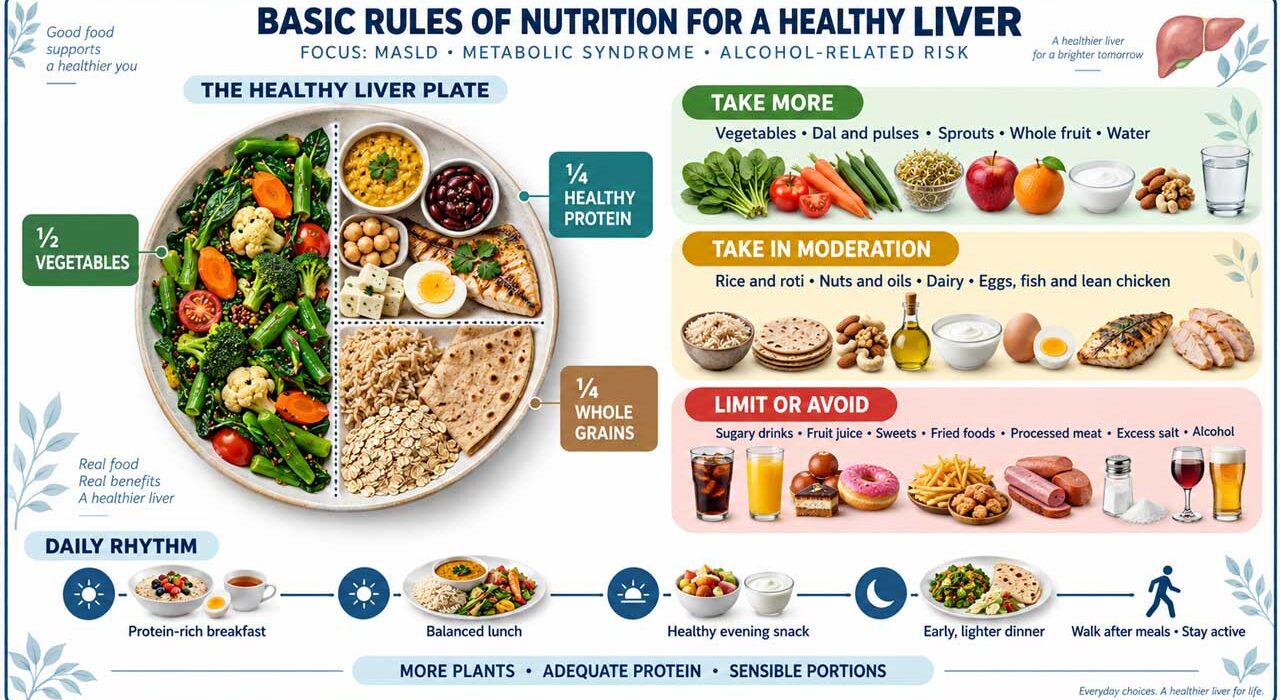
At lunch and dinner, divide the plate approximately as follows:
- Half the plate: vegetables and salad
- One-quarter: protein-rich food
- One-quarter: whole grains or another high-fibre carbohydrate
This simple plate helps control calories without requiring complicated calculations.
Vegetable options include spinach, beans, bhindi, cauliflower, cabbage, tomato, cucumber, carrot, brinjal, capsicum and other seasonal vegetables.
Protein may come from dal, chana, rajma, sprouts, soy, tofu, curd, paneer in moderation, eggs, fish or lean chicken.
Carbohydrate portion may include one or two small whole-wheat or millet rotis, oats, dalia, brown rice or a controlled portion of ordinary rice.
What should be eaten more often?
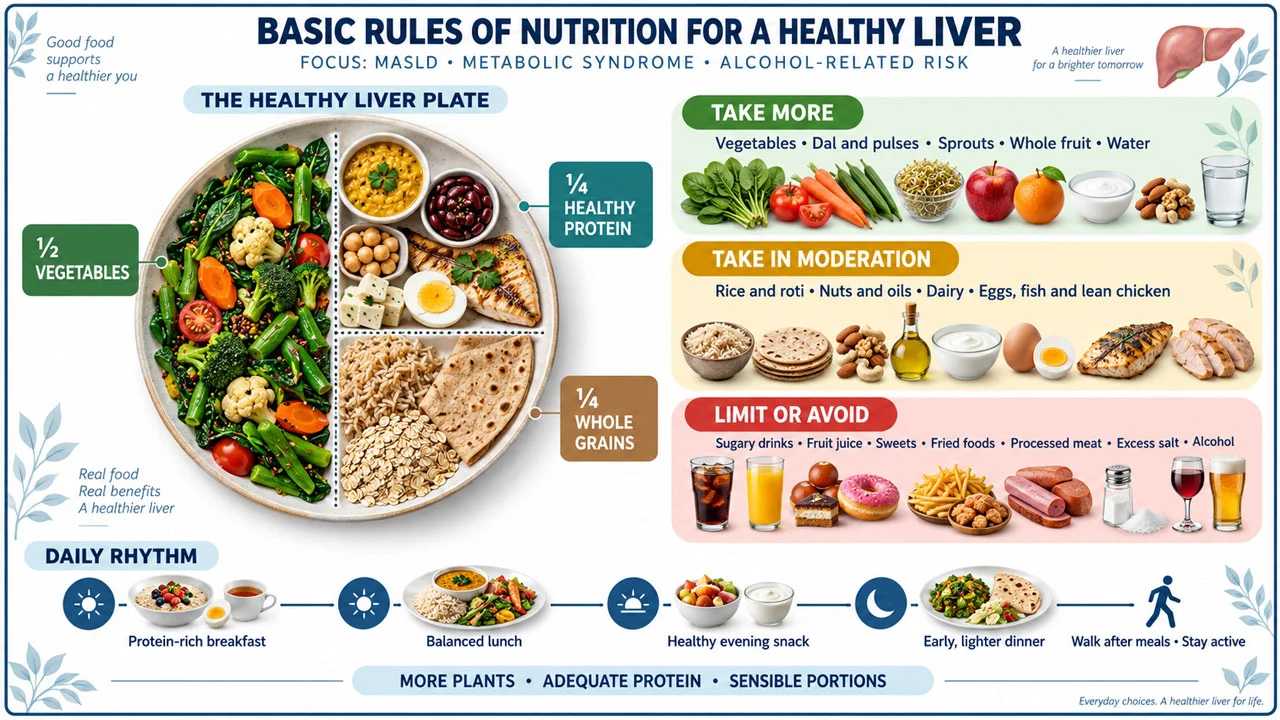
- Vegetables
Vegetables should occupy the largest part of the plate. They provide fibre, vitamins and minerals, improve fullness and help reduce the calorie density of meals. Include different colours and varieties. A combination of cooked vegetables and raw salad is practical, provided food hygiene is maintained. Potato, sweet potato, yam and arbi are nutritious but contain more starch. They should be counted as part of the carbohydrate portion rather than treated as unlimited vegetables.
- Adequate protein
A healthy liver diet should contain adequate protein, not simply “high protein” for everyone. Protein preserves muscle, improves fullness and supports metabolic health. Include a protein source with every main meal. Vegetable and dairy proteins are especially useful. People with cirrhosis should not restrict protein unless specifically instructed by their treating team. Clinically stable adults with cirrhosis may require higher protein intake than healthy adults. Good choices include:
- Dal, rajma, chana and other pulses
- Sprouts, tofu, soybeans and soy products
- Eggs
- Fish and lean chicken
- Unsweetened curd or yoghurt
- Milk and moderate portions of paneer
- Fibre-rich carbohydrates
Carbohydrates do not need to be eliminated. The important issues are their quality and quantity.
Prefer whole-wheat roti, millets, oats, dalia, legumes and modest portions of rice. Combine carbohydrates with vegetables and protein rather than eating a predominantly rice- or roti-based meal. Whole foods affect blood glucose more gradually than sugary drinks, sweets and refined-flour foods. The recommendation is portion control, low-glycaemic foods and avoidance of foods and drinks containing large amounts of simple sugars for people with MASLD.
- Whole fruit
Choose one portion of whole fruit at a time. Apples, oranges, guava, papaya, pears, berries and other seasonal fruits can be included. Fruit is healthy, but it is not unlimited—particularly for people with diabetes, high triglycerides or obesity. Whole fruit is preferable to fruit juice because it contains fibre and is more filling.
- Water
Water should be the main drink. Unsweetened tea, plain buttermilk and black coffee without sugar may also be suitable for many people. People with ascites, severe heart disease, advanced kidney disease or low blood sodium may require individualised fluid advice and should not increase water intake without medical guidance.
What should be consumed in moderation?
Grains and starchy foods
Rice, roti, millets and oats provide energy and can be part of a healthy diet, but portion size matters. Whole grains can still cause weight gain if consumed in excessive quantities.
Healthy fats
Fat should not be eliminated completely. Small quantities of vegetable oils, nuts, seeds and fish provide useful unsaturated fats. However, oils, nuts and seeds are calorie-dense. Use cooking oil sparingly and limit a serving of nuts to a small handful. Replace saturated and trans fats with unsaturated fats whenever possible.
Dairy products
Choose unsweetened curd, low-fat milk and modest portions of paneer. Avoid sweetened yoghurt, flavoured milk, cream-heavy preparations and large amounts of cheese.
Non-vegetarian food
Prefer fish, eggs and lean chicken. Healthier cooking methods include steaming, grilling, roasting, baking, pressure-cooking and boiling. Red meat should be occasional, while processed meats such as sausages, salami, bacon and packaged meat products should be limited. Avoid frequent deep-frying, heavy gravies, charring and excessive salt.
Salt
Use less salt during cooking and avoid adding salt at the table. Pickles, papad, namkeen, instant noodles, packaged soups, sauces and processed foods may contain large amounts of sodium. Salt restriction is particularly important for people with hypertension, heart disease, kidney disease or fluid retention. People with cirrhosis and ascites require individualised advice because excessively restrictive diets may reduce food intake and worsen malnutrition.
What should be avoided or sharply reduced?
Sugary drinks
Soft drinks, energy drinks, packaged fruit juice, sweetened tea or coffee, flavoured milk and sugary shakes provide substantial sugar without producing lasting fullness. Sugary beverages are associated with excess calorie intake, weight gain, high triglycerides, insulin resistance and liver-fat accumulation.
Sweets and refined carbohydrates
Limit sweets, cakes, biscuits, pastries, desserts, sweet breakfast cereals, white bread, maida products and large servings of white rice. “Sugar-free” or “diabetic” labels do not automatically make a processed food healthy.
Fried and ultra-processed foods
Reduce samosa, pakora, puri, bhatura, chips, fast food, bakery products and foods cooked in repeatedly heated oil.
Alcohol
Alcohol is not a liver-health drink, even when consumed as wine. Ethanol is a toxic and dependence-producing substance. Risk generally increases as alcohol consumption increases. People with fatty liver, metabolic syndrome, obesity or diabetes may experience combined harm from metabolic dysfunction and alcohol. Alcohol can add to liver fat, inflammation and fibrosis. The safest approach for liver health is not to drink.
Anyone with cirrhosis, alcohol-associated liver disease, pancreatitis, previous alcohol dependence or difficulty controlling intake should avoid alcohol completely and seek professional guidance.
A practical daily routine
On waking
Drink plain water according to thirst. Avoid honey water, sugar-containing detox drinks and commercial liver-cleanse products.
Breakfast
Choose one:
- Vegetable oats with an egg or unsweetened curd
- Two small vegetable besan chillas with curd
- Vegetable dalia with sprouts
- Two eggs with vegetables and one small whole-wheat roti
- Idli with sambar, with controlled chutney and no sugary drink
Avoid routinely starting the day with fruit juice, sweetened cereal, biscuits or fried breakfast foods.
Mid-morning
Choose whole fruit or a small handful of unsalted nuts. Do not combine multiple fruits into a large juice or smoothie.
Lunch
Use the balanced-plate method:
- Half a plate of vegetables and salad
- Dal, rajma, chana, fish or lean chicken
- One or two small rotis or a modest rice portion
- Unsweetened curd, if suitable
Evening
Choose roasted chana, sprouts, fruit, unsweetened tea or black coffee without sugar. Avoid biscuits, namkeen, fried snacks and sugary drinks.
Dinner
Eat a lighter meal, ideally two to three hours before sleep. Include vegetables and protein with a smaller carbohydrate portion. A suitable dinner may be grilled fish or tofu with vegetables and one roti, vegetable soup with egg and salad, or dal with mixed vegetables and a modest grain portion.
Activity and sleep
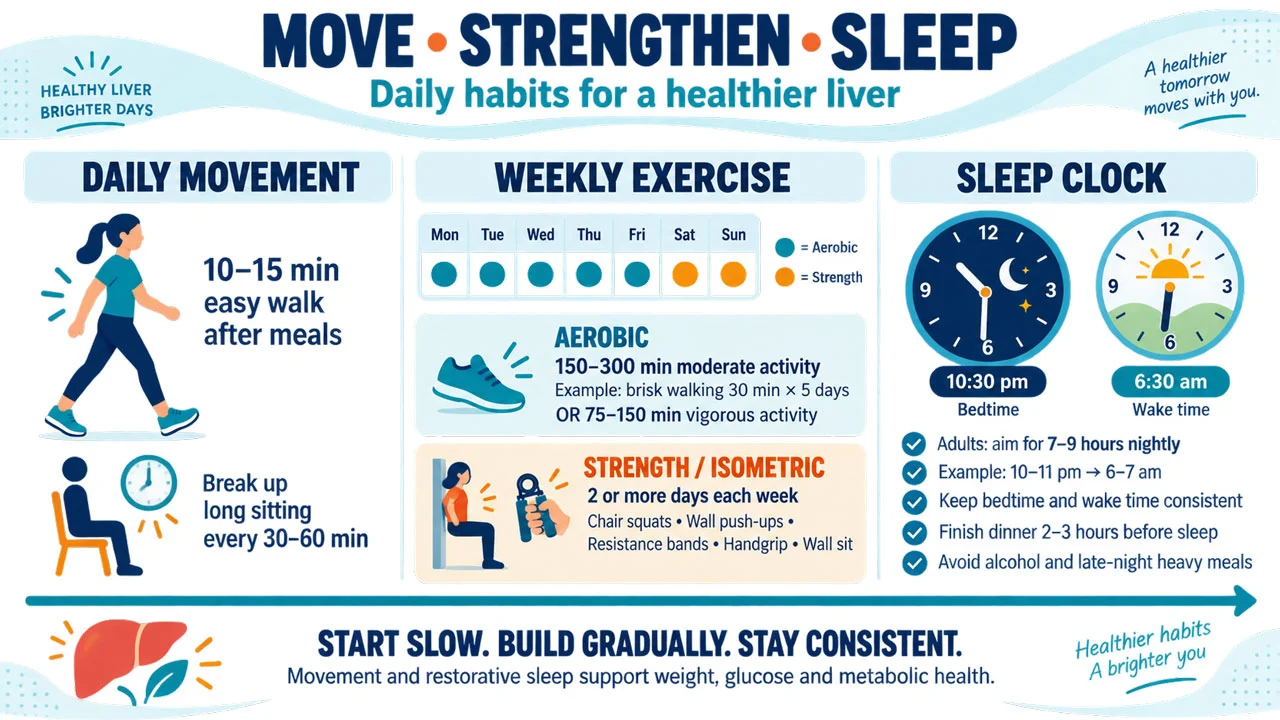
Avoid sitting continuously after meals. A 10–15-minute walk after eating may help reduce prolonged inactivity and improve glucose control. Aim for regular aerobic activity and resistance exercise. Approximately 150 minutes of moderate physical activity each week can improve liver enzymes and metabolic health. Adequate sleep and a regular routine also support appetite, weight and glucose regulation.
The final message
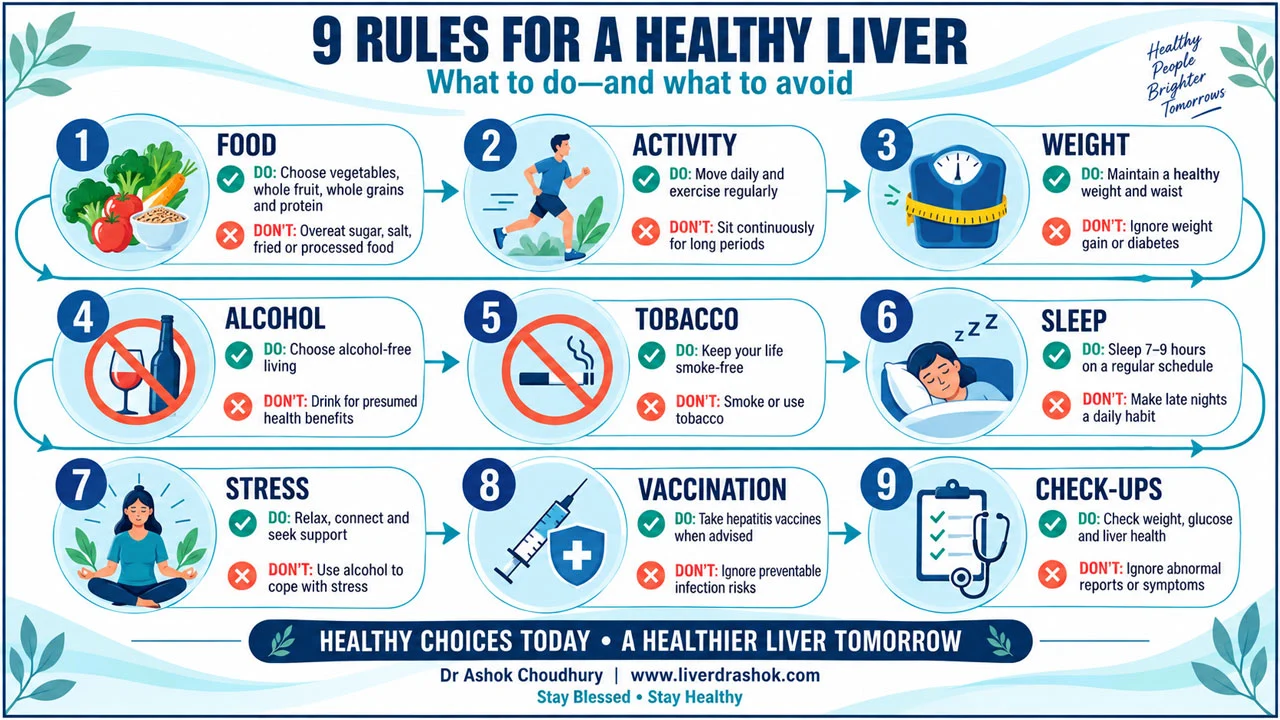
A healthy-liver diet does not mean starvation, complete carbohydrate avoidance or expensive imported foods. It means:
Healthy food supports the liver, but it does not replace medical assessment or treatment. People with cirrhosis, ascites, kidney disease, diabetes, pregnancy, malnutrition or significant weight loss need an individualised plan from their doctor and dietitian.
Disclaimer: This article is intended for public education and awareness. It is not a substitute for personalised medical or nutritional advice.